Presidential Lessons in Institution Building for Nonprofit Leaders
President’s Day is more than a federal holiday. For nonprofit leaders, it is an invitation to study the art and discipline of building institutions that outlast the people who created them.
History remembers our greatest presidents not simply because they had vision — plenty of people have vision. We remember them because they had the discipline, the strategic thinking, and the institutional courage to translate vision into durable systems, structures, and organizations that continued to serve people long after they left office. That is the work of nonprofit leadership. Not just starting something. Building something.
This President’s Day, I want to draw four lessons from four presidents whose legacies speak directly to the challenges you face as a nonprofit founder or executive director.
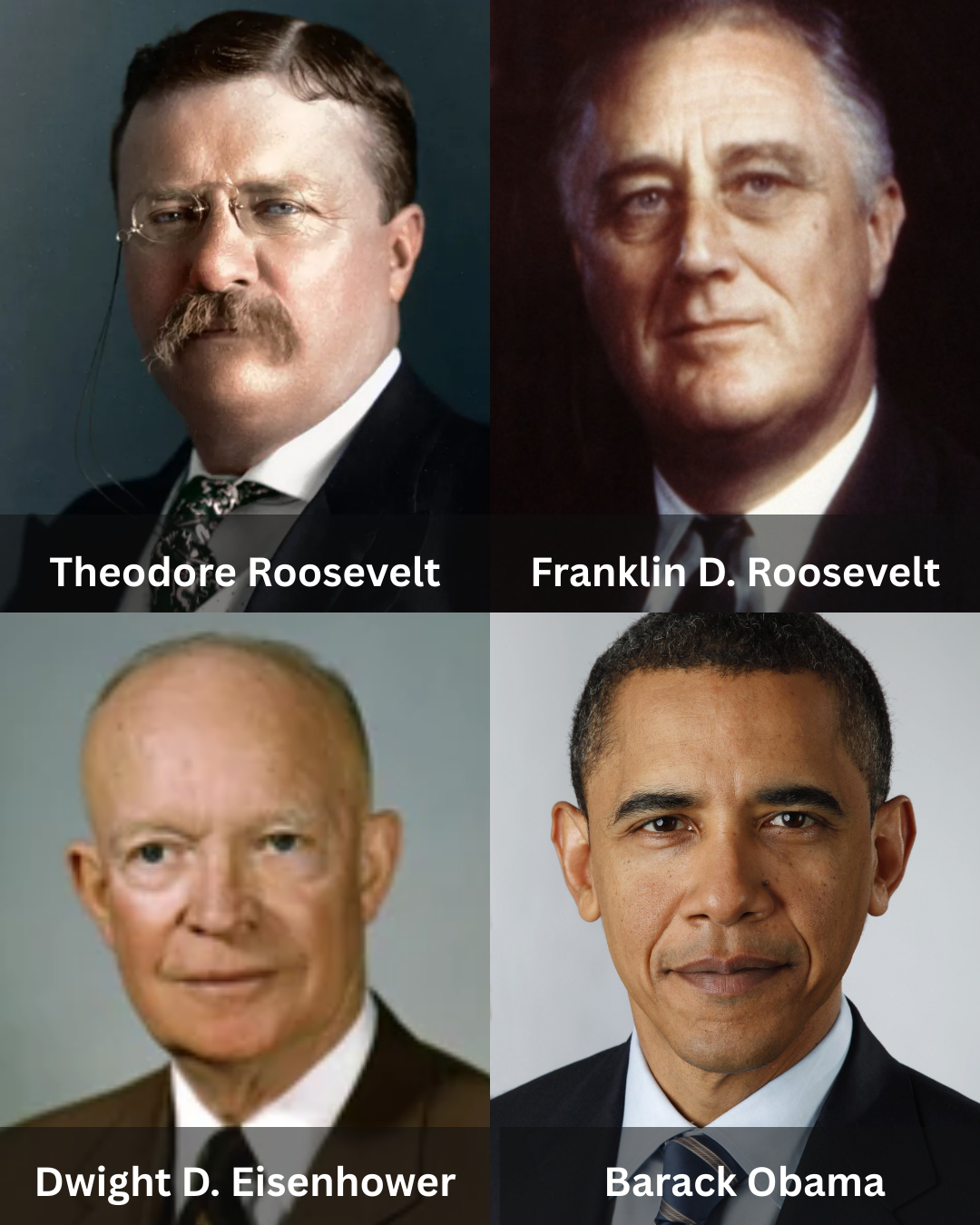
Theodore Roosevelt: Accountability Structures Protect Your Mission
The Lesson: Compliance and regulation are not obstacles — they are safeguards.
Theodore Roosevelt stepped into the presidency at a moment when unchecked power was eroding public trust. Corporations had grown massive and largely unaccountable. The gap between those with resources and those without was widening dangerously. And the institutions meant to protect ordinary people were either absent or captured by the very interests they were supposed to regulate.
Roosevelt’s response was not to dismantle power — it was to build the accountability structures that would ensure power served the public good. He broke up monopolies through antitrust enforcement. He signed the Pure Food and Drug Act to protect consumers. He established the U.S. Forest Service and set aside millions of acres of public land for future generations. He used the authority of his office not to control for its own sake, but to protect.
What Roosevelt understood — and what many nonprofit leaders resist — is that accountability structures are not constraints on your mission. They are protectors of it.
The lesson for nonprofit leaders: Financial policies, board oversight, compliance systems, and program evaluation frameworks are the checks and balances that keep your organization trustworthy, fundable, and mission-aligned. Many founders resist structure in the early stages because they equate it with red tape. But unregulated organizations — like unregulated industries — tend to drift, collapse, or cause harm. Build your accountability infrastructure early and it will protect everything you are working to create.
Franklin D. Roosevelt: Design Systems, Not Just Programs
The Lesson: Charity addresses symptoms. Systems address causes.
When Franklin Roosevelt took office in 1933, the United States was in the grip of the Great Depression. One in four Americans was unemployed. Banks were collapsing. Families were losing homes, farms, and hope. The need was immediate, urgent, and overwhelming.
FDR could have responded with emergency relief and stopped there. Instead, he built systems. Social Security. The FDIC. The Securities and Exchange Commission. The Federal Housing Administration. The Works Progress Administration. Each initiative was designed not merely to address a crisis but to create durable infrastructure that would prevent the next one.
Nearly a century later, millions of Americans still depend on the systems FDR built. That is the definition of institutional legacy.
FDR also understood something that every nonprofit leader needs to internalize: you cannot sustain emergency-mode operations indefinitely. At some point, you have to move from response to structure. From programs to systems. From doing the work to building the infrastructure that makes the work sustainable.
The lesson for nonprofit leaders: Programs are what you do. Systems are how you sustain it. When you build a program logic model, define measurable outcomes, and connect your work to a clear theory of change, you move from delivering services to building evidence. That evidence attracts funders, builds credibility, and creates the foundation for real growth. The question is not just “What are we doing?” but “How does what we do create change that compounds over time?”
Dwight D. Eisenhower: Infrastructure Is the Strategy
The Lesson: Invest in the backbone that makes everything else possible.
Dwight Eisenhower came to the presidency shaped by military logistics. As Supreme Commander of Allied Forces in World War II, he had managed one of the most complex organizational undertakings in human history — and he had learned that strategy without operational infrastructure is just a plan on paper.
In 1956, Eisenhower signed the Federal Aid Highway Act, authorizing the construction of the Interstate Highway System — 41,000 miles of road that would fundamentally transform American commerce, mobility, and connectivity. It remains one of the largest public works projects in world history. And it was built on a simple conviction: before you can move anything, you need the roads.
Eisenhower also said something that has stayed with leaders across every sector: “Plans are worthless, but planning is everything.” He meant that the process of building the plan — thinking through contingencies, developing capacity, stress-testing assumptions — prepares you for whatever comes next, even when the original plan has to change.
The lesson for nonprofit leaders: Too many nonprofit leaders treat infrastructure as something they will get to “one day” — after the next grant, after the next hire, after things settle down. But things rarely settle down. Without infrastructure — financial systems, board policies, operational procedures, data tools — your organization cannot scale, cannot survive leadership transitions, and cannot attract serious funders. The Interstate Highway System did not slow down commerce. It made commerce possible at a scale no one had previously imagined. Your operational infrastructure works exactly the same way.
Barack Obama: Community Organizing Is Institution Building
The Lesson: Leadership developed from within community is the most durable kind.
Before Barack Obama was a U.S. Senator, before he was a candidate for president, before he made history as the 44th President of the United States, he was a community organizer on the South Side of Chicago. Working in Roseland and Altgeld Gardens, he helped residents address environmental hazards, unemployment, and decades of disinvestment. And what he learned in those years shaped everything about how he led.
Community organizing is not just knocking on doors. It is identifying leadership that already exists within a community, building relationships across difference, listening before acting, and developing the collective capacity to address problems that no individual can solve alone. At its core, it is an act of institutional faith — a belief that people, well organized and well supported, can build the power to change their circumstances.
Obama’s 2008 presidential campaign was built on that same foundation — grassroots fundraising, distributed leadership, and genuine civic engagement at a national scale. And as president, he launched My Brother’s Keeper, mobilizing a network of nonprofit organizations, businesses, and community partners to close opportunity gaps for young men of color. That initiative was not government-run. It was community-rooted, with government as a catalyst and convener — precisely the role that strong nonprofits play every day.
The lesson for nonprofit leaders: Your organization’s greatest asset is not your programming. It is your community. The relationships you build, the leaders you develop, the trust you earn over time — these are the foundations of durable impact. Funders come and go. Grants end. Policies change. But organizations that are genuinely embedded in the communities they serve, that develop leadership from within, and that treat the people they serve as partners rather than beneficiaries — those organizations endure.
The Common Thread: Infrastructure Over Intention
Theodore Roosevelt built accountability systems that protected the public good. Franklin Roosevelt designed structural interventions that lasted nearly a century. Dwight Eisenhower invested in the operational infrastructure that made everything else possible. Barack Obama led from within community and developed the distributed leadership that no single person could own or replicate.
Four different eras. Four different challenges. One common lesson: vision without infrastructure is just a wish.
Too many nonprofits are launched on mission and passion alone. The commitment is real. The need is genuine. But the infrastructure — the governance structures, the financial systems, the program logic, the compliance frameworks, the fundraising strategies — is never built. The result is an organization that is always busy but never sustainable. Always serving but never scaling. Always surviving but never thriving.
Strong intentions are not enough. Infrastructure matters.
Four Questions for This President’s Day
Inspired by each of our four presidents, here is one honest question to sit with this week:
1. Accountability (Theodore Roosevelt): Do you have the financial policies, board oversight, and compliance systems in place to keep your organization accountable — to your mission, your community, and your funders?
2. Systems (Franklin Delano Roosevelt): Are your programs built on a clear theory of change with measurable outcomes — or are you running activities and calling them impact?
3. Infrastructure (Dwight D. Eisenhower): Have you invested in the operational backbone — financial systems, board policies, procedures, technology — that will allow your organization to function and grow beyond you?
4. Community (Barack Obama): Are you developing leaders within your community and organization — or are you the organization? Would your work survive and grow without you at the center?
If any of these questions made you uncomfortable, that discomfort is not a sign of failure. It is a signal of opportunity — and a very good place to start.
Your Legacy Is Being Written Now
We do not remember great presidents because of their intentions. We remember them because of what they built — the systems, the structures, the institutions that continued to serve people long after their time in office ended.
Your community does not need another well-meaning organization. It needs a well-built one. One with governance that works. Programs that produce measurable outcomes. Finances that are transparent and sustainable. Leadership that can be developed, shared, and eventually handed off.
The great presidents did not just hold office. They built institutions that endured.
This President’s Day, commit to doing the same.
Ready to Build Your Institution?
At Nonprofit Utopia, we help nonprofit founders and executive directors build organizations that are legally compliant, strategically grounded, financially structured, and built to last. Whether you are just starting out or leading an established organization ready to strengthen its infrastructure, we have the frameworks, the community, and the coaching to support your journey.
✓ 90 Days to a New Nonprofit | Guided by the LEGACY™ Framework
✓ Nonprofit Utopia Impact Circle | Fundraising Community & Peer Support
✓ Strategic Coaching & Consulting | Governance, Operations & Growth